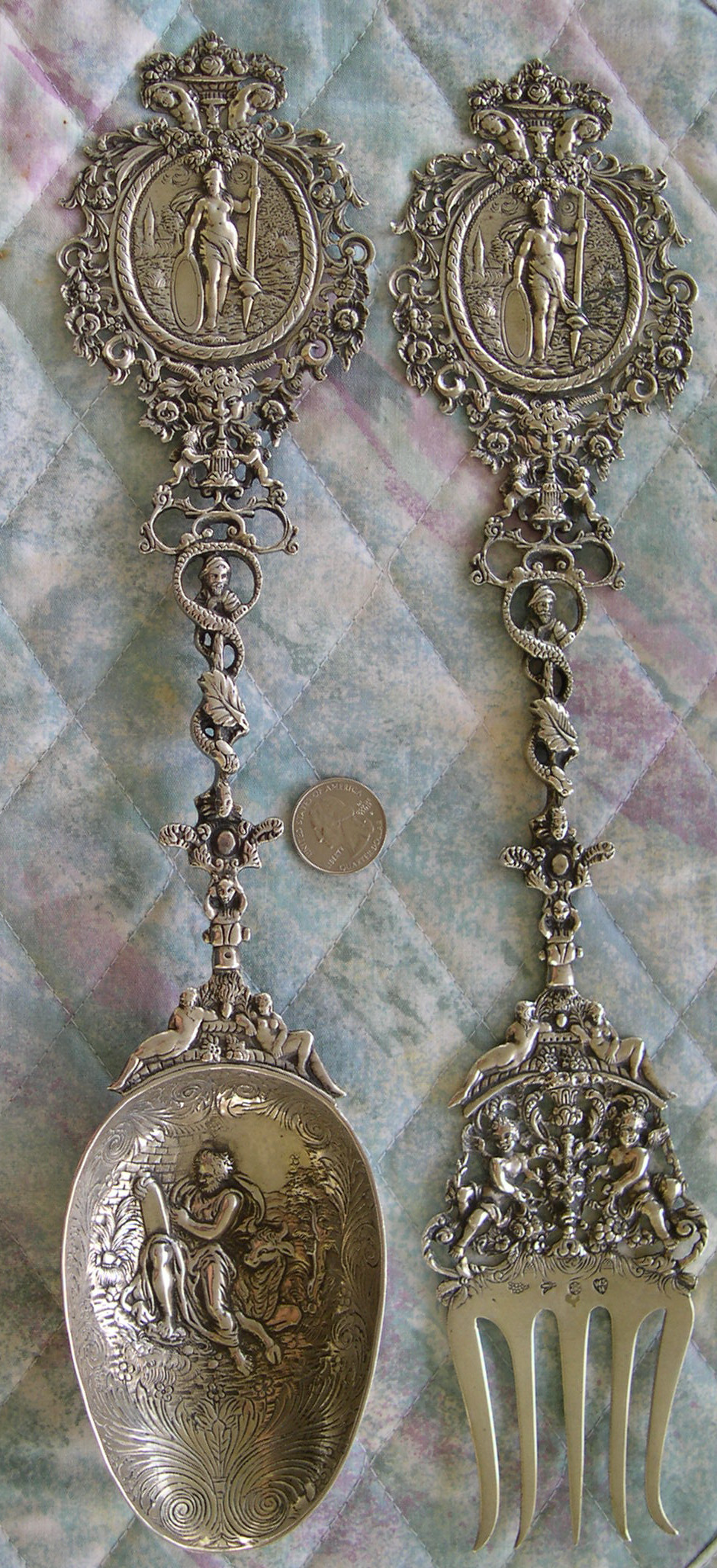
These are the largest spoon fork silver pieces which I own. They are huge. The spoon measures about 14.5" (375mm) from the top to the bottom of the bowl and they have a silver weight commensurate with their size. The quarter is to give you an idea of relative size.
The main scene at the top is a Roman Centurion in a flowing robe and he is holding a shield in his right hand and a spear in the left. In the background is a spire and a small cottage.
Above him are two nude male partial torsos under a flower basket.
Below the centurion is a male figure blowing on a musical instrument which is being supported by two small children.
Below that is a snake which encircles a man's profile and a leaf.
Below the snake is another undefined person above some type of shield and a another smaller profile below
Above the bowl are two figures in a reclining position. The left figure has the back to the viewer and the right figure is a reclining female nude.
The very deep bowl features a picture of Moses seated on a bull (calf?) and holding a tablet which I presume is from the ten commandments. The background in the bowl features a plant, a brick wall and a tree as well as numerous swirls and designs.
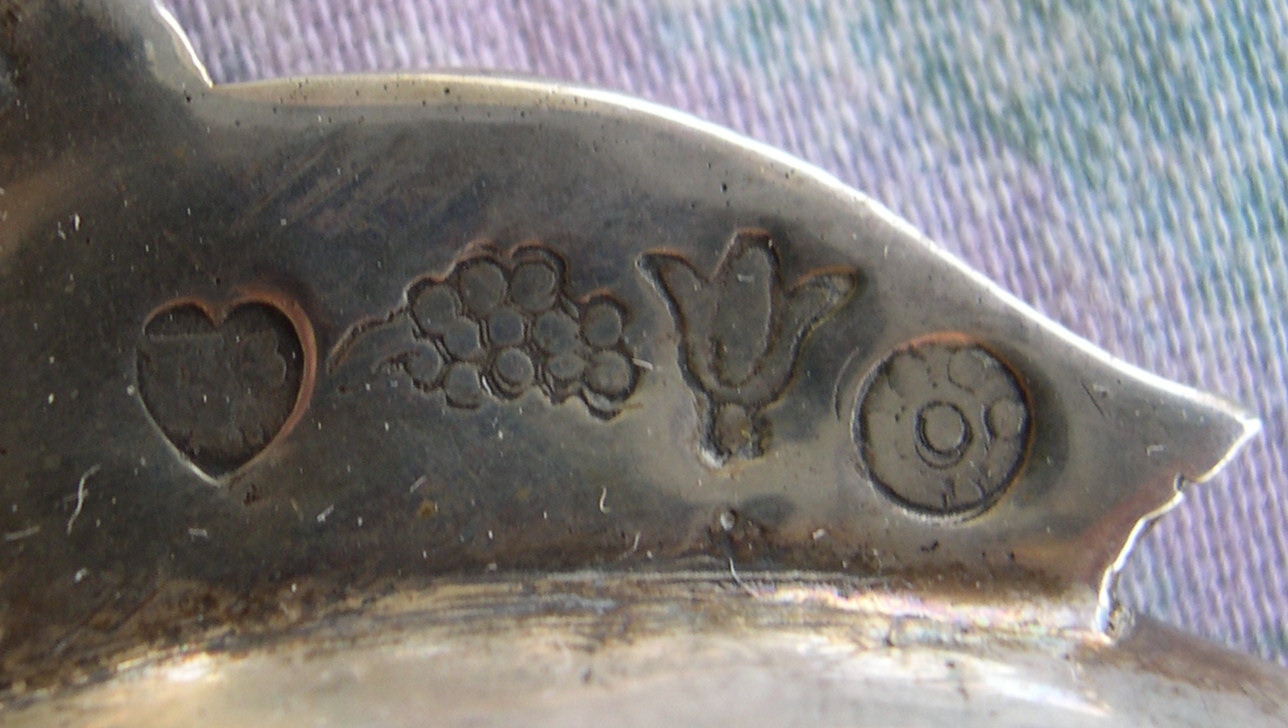
I thought that these marks were just typical German pseudo marks, but an alert reader, Nick Peck, told me about a new page which identifies some Hanau silver marks.
According to this information, these pieces were made by Weinranck and Schmidt and were probably made in the 1890's. This firm specialized hand made silver.
There is also a capital 'G' in the bowl.
Return to huge spoon index
Return to Spoon exhibits page